You Won’t Believe What This Canadian City Hides in Plain Sight
Winnipeg isn’t the first place people think of when they imagine Canadian art and culture—but it should be. I went in expecting quiet streets and cold winters, and walked out stunned by bold murals, Indigenous storytelling, and creative energy around every corner. This city pulses with authenticity, from grassroots galleries to street art that speaks volumes. If you’re craving culture that feels real, not rehearsed, Winnipeg might just surprise you—deeply.
First Impressions: Why Winnipeg Surprised Me
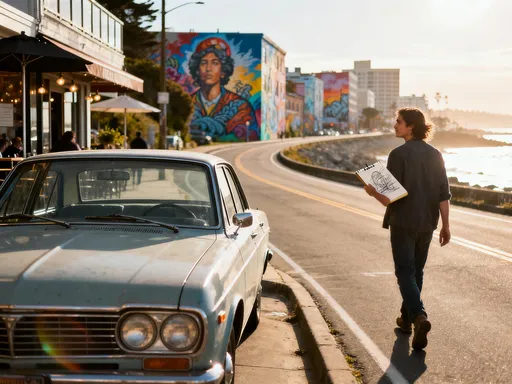
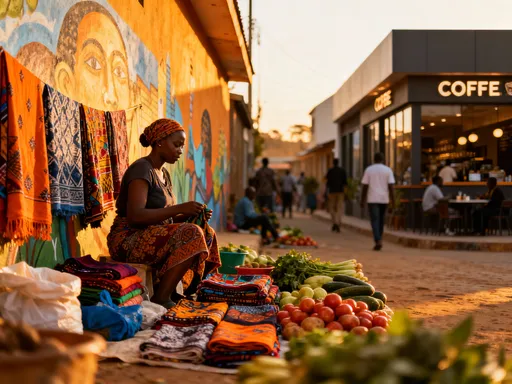
For many travelers, Winnipeg exists as a geographic waypoint rather than a destination. It's often mentioned in passing—home to long winters, strong winds, and a reputation for being more functional than fascinating. Before my visit, I had envisioned a city shaped by practicality, where creativity might struggle beneath snow-covered sidewalks and overcast skies. What I found instead was a place brimming with quiet confidence, where art emerges not despite the climate, but as a response to it. The turning point came just minutes after stepping off the bus downtown, when I turned a corner and came face to face with a towering mural depicting a woman in traditional regalia, her gaze steady, her presence commanding. The colors were vivid, the details intricate, and the message unmistakable: this city has stories to tell.
That mural, part of Winnipeg’s official public art program, was not an anomaly. It was a signal of something deeper—an artistic pulse that beats steadily beneath the surface. Unlike flashier cultural capitals that market themselves aggressively, Winnipeg reveals itself slowly. There’s no grand announcement, no neon sign declaring its creative credentials. Instead, you stumble upon beauty in alleyways, hear poetry in unexpected corners, and feel the presence of history in repurposed brick warehouses. This lack of pretense is precisely what makes the experience so powerful. The city does not perform for outsiders; it lives its culture every day, inviting those who pay attention to step closer.
What surprised me most was how quickly my perception shifted—from seeing Winnipeg as a place to pass through to viewing it as a place worth lingering in. Within hours, I had abandoned my original plan of a short layover and extended my stay. I wanted to understand the forces shaping this vibrant scene: who were the artists? What inspired them? How had a city so often overlooked become such a quiet powerhouse of expression? The answers, I would soon learn, lie in community, resilience, and a deep-rooted commitment to cultural truth.
The Heartbeat of the City: Public Art That Speaks
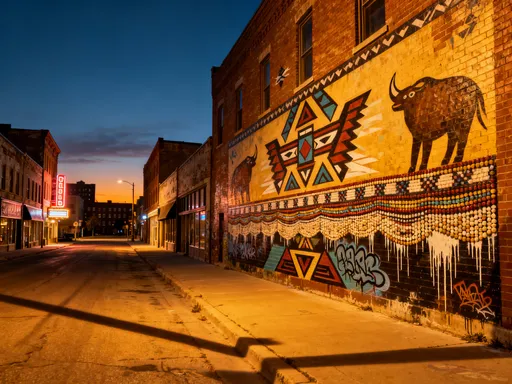
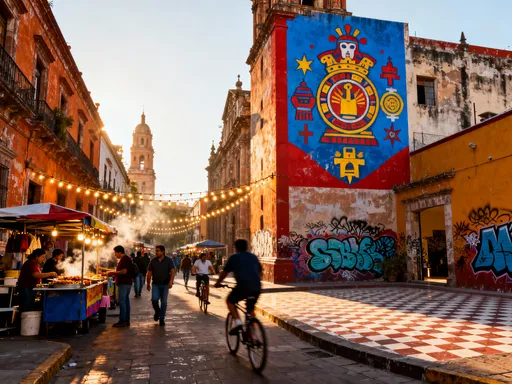
Winnipeg’s street art is not mere decoration—it is dialogue. The city has embraced muralism as both a creative outlet and a tool for civic conversation, supporting legal walls, artist grants, and community-led projects that transform blank surfaces into powerful statements. Unlike some cities where graffiti is seen as vandalism, Winnipeg treats public art as an essential part of urban identity. The result is a landscape where creativity flourishes openly, and where every neighborhood tells its own story through color, form, and symbolism.
The Exchange District stands as one of the richest zones for public art, its historic brick buildings serving as canvases for large-scale works that reflect both local pride and global awareness. Walking through this area feels like moving through an open-air museum. One mural honors Ukrainian immigrants who helped shape the city, while another addresses environmental justice with striking imagery of melting glaciers and endangered species. These are not neutral images—they carry weight, provoke thought, and invite reflection. Nearby, on Corydon Avenue in the heart of the city’s Franco-Manitoban community, murals celebrate linguistic heritage and cultural diversity, blending French typography with Indigenous motifs in harmonious compositions.
Osborne Village offers a different flavor, where contemporary artists experiment with surrealism, abstraction, and pop culture references. Here, the tone is playful yet pointed, often commenting on consumerism, technology, or mental health. A particularly memorable piece features a child holding a mirror toward the viewer, the reflection blank—inviting onlookers to consider their own role in society’s narratives. These murals are not just seen; they are felt. They linger in the mind long after the photo is taken.
What unites these diverse works is their grounding in community values. Many are created in collaboration with residents, schools, or cultural organizations, ensuring that the art reflects real voices rather than outside interpretations. Themes of resilience, inclusion, and remembrance recur throughout, echoing Winnipeg’s complex social fabric. This is public art with purpose—a living, breathing expression of what matters to the people who call this city home.
Indigenous Art: More Than Aesthetic—It’s Storytelling
At the core of Winnipeg’s cultural landscape lies its deep connection to First Nations, Métis, and Inuit communities. As the urban center with one of the largest Indigenous populations in Canada, the city serves as a vital hub for contemporary Indigenous expression. Here, art is not separate from life—it is a continuation of tradition, a form of resistance, and a means of healing. To experience Indigenous art in Winnipeg is to engage with living histories, ongoing struggles, and profound beauty.
Spaces like the Urban Shaman Gallery offer intimate encounters with cutting-edge Indigenous creativity. Located in the heart of the city, this artist-run center showcases works that challenge stereotypes and redefine narratives. Exhibitions often blend traditional materials—such as beadwork, hide, and quillwork—with modern techniques like video installation and digital media. One recent show featured a series of beaded protest signs, each replicating real slogans from land defense movements, transforming activism into wearable art. These pieces do not simply represent resistance; they embody it.
Another key institution is the Plug In Institute of Contemporary Art, which regularly collaborates with Indigenous curators and artists to present thought-provoking exhibitions. Here, visitors encounter works that explore identity, sovereignty, and intergenerational trauma—not as distant concepts, but as lived realities. A standout installation used audio recordings of Elders’ voices layered over shifting light projections, creating an immersive environment that evoked both memory and presence. Such works demand more than observation; they ask for respect, listening, and reflection.
Contemporary artists like KC Adams, Michael Abouta, and Sonya Kelliher-Combs are redefining what Indigenous art can be—bridging ancestral knowledge with present-day experiences. Their work appears in galleries, on billboards, and in public spaces, ensuring visibility and accessibility. Through portraiture, sculpture, and mixed media, they assert Indigenous presence in urban life, countering erasure and invisibility. For visitors, engaging with this art is not just educational—it is an act of acknowledgment, a step toward understanding the land and its original stewards.
Hidden Galleries and Grassroots Creativity
Beyond the well-known institutions, Winnipeg thrives on a network of hidden creative spaces—small, independent, and deeply rooted in community. These grassroots galleries operate outside the commercial art world, prioritizing experimentation, accessibility, and inclusivity. Found in converted warehouses, former storefronts, and even residential basements, they reflect a DIY spirit that values process over polish and participation over prestige.
One such space is Ace Art Inc., a nonprofit artist-run center that has supported emerging creators for over four decades. Without permanent collections or ticketed admissions, Ace functions as a laboratory for new ideas. Exhibits rotate frequently, often featuring interdisciplinary work that blurs the lines between visual art, performance, and social practice. A recent exhibition invited visitors to write letters to future generations about climate change, which were then sealed and stored to be opened in 2050. This kind of interactive, forward-thinking approach defines the ethos of Winnipeg’s underground scene—art as a shared responsibility.
Pop-up exhibitions are another hallmark of the city’s informal art culture. During warmer months, vacant lots and parking garages are transformed into temporary galleries, often organized by collectives of young artists seeking affordable ways to share their work. These events draw diverse crowds, from longtime residents to curious tourists, fostering connections across generations and backgrounds. The impermanence of these shows adds to their charm—there’s a sense of urgency, of catching something fleeting before it disappears.
What makes these spaces so impactful is their intimacy. Unlike large museums, where distance is maintained between viewer and artwork, grassroots venues encourage closeness. You might speak directly with the artist, sit on a bench made from reclaimed wood, or sip coffee brewed by a volunteer. There’s a warmth here, a feeling of belonging that formal institutions sometimes lack. For travelers seeking authentic cultural experiences, these hidden galleries offer a rare glimpse into the soul of the city—not as it’s marketed, but as it truly lives.
The Winnipeg Art Gallery and Qaumajuq: A Cultural Landmark
No exploration of Winnipeg’s art scene is complete without a visit to the Winnipeg Art Gallery (WAG), the city’s premier visual arts institution. Established in 1912, the WAG has evolved from a modest collection into a nationally recognized museum with a bold vision for the future. Its most transformative development came with the opening of Qaumajuq in 2021—an Inuktitut word meaning “it is bright, it is lit”—a groundbreaking center dedicated to Inuit art.
Qaumajuq houses the largest public collection of contemporary Inuit art in the world, with over 14,000 pieces spanning sculpture, printmaking, textiles, and new media. The building itself is a masterpiece of cultural architecture, designed in collaboration with Inuit communities and architects from across the North. Its curved, luminous facade evokes the shape of an iceberg, while inside, a dramatic three-story Visible Vault displays thousands of carvings behind glass walls, glowing like treasures in a sacred archive. This transparency is intentional—visitors are invited to see, honor, and learn from the collection, rather than view it as distant or exotic.
The visitor experience at Qaumajuq is both educational and emotional. Interactive displays allow guests to hear artists speak in their own voices, sharing the stories behind their work. One exhibit features a stone carving of a transformation figure—a being caught between human and animal forms—accompanied by an audio narrative explaining its spiritual significance. Another room simulates the Northern lights, projecting shifting hues across the ceiling while soft Inuktitut songs play in the background. These sensory elements create a deep sense of connection, transporting visitors far beyond the gallery walls.
For many, Qaumajuq represents more than a museum—it is a symbol of cultural reclamation and resilience. By centering Inuit voices in the curation, display, and interpretation of their own art, the institution challenges colonial museum practices and sets a new standard for ethical engagement. For travelers, a visit here is not just about viewing art; it is about bearing witness to a living culture, one that continues to thrive despite historical challenges. It is, without question, a must-see destination for anyone interested in authentic, meaningful cultural exchange.
Festivals That Bring Art to Life
In Winnipeg, art doesn’t stay confined to galleries—it spills into the streets, parks, and public squares through a vibrant calendar of festivals. These events transform the city into an open-air stage, where creativity becomes collective, and participation is encouraged. For locals and visitors alike, festival seasons are times of renewal, connection, and celebration.
Nuit Blanche Winnipeg is one of the most anticipated events of the year. Inspired by the international movement, this all-night arts festival takes place in October, turning the city into a luminous playground of installations, performances, and interactive experiences. Buildings are lit with projections, dancers perform in abandoned lots, and poets read beneath streetlights. One unforgettable moment involved a silent disco in a snow-covered courtyard, where hundreds of people danced under the stars, headphones glowing in the dark. The energy is electric, yet inclusive—there’s room for everyone to find their place in the celebration.
Folklorama, the world’s largest and longest-running multicultural festival, offers another dimension of artistic expression. Over two weeks each summer, pavilions representing more than 40 cultural communities open across the city, each offering traditional music, dance, food, and crafts. Walking from pavilion to pavilion feels like traveling the world in a single evening. You might watch a Ukrainian dance troupe in full costume, sample Métis bannock, then listen to a Maori haka performance—all within a few city blocks. The festival is a testament to Winnipeg’s diversity and a powerful reminder of how art fosters understanding across cultures.
Culture Days, held every fall, invites the public to engage directly with artists through workshops, open studios, and behind-the-scenes tours. Ceramics classes, printmaking demos, and storytelling circles pop up in libraries, community centers, and even laundromats. These hands-on experiences break down barriers between creator and audience, emphasizing that art is not just for viewing—it is for doing. For families, retirees, and curious travelers, these moments of creative engagement offer lasting memories and new skills.
How to Experience Winnipeg’s Art Scene Like a Local
To truly appreciate Winnipeg’s art, timing and approach matter. The best months to visit are June through October, when outdoor murals are visible, festivals are in full swing, and gallery openings draw lively crowds. Late summer and early fall are particularly vibrant, with Culture Days and the Winnipeg International Writers Festival adding to the cultural momentum. That said, winter has its own charm—fewer tourists, cozy cafés, and indoor exhibitions that shine brightest when the snow falls.
Walking tours are among the most rewarding ways to explore. Self-guided mural trails, available through the city’s tourism website, map out key artworks with background information and artist bios. For a deeper dive, consider joining a guided tour led by local historians or artists who share insider perspectives on the meaning behind the images. The Exchange District Heritage Walking Tour, for example, combines architectural history with contemporary art, revealing how old and new coexist in dynamic harmony.
When it comes to refueling, Winnipeg’s café culture complements its artistic vibe. Small, independent coffee shops like Thom Bargen and Crank occasionally double as mini-galleries, displaying rotating works by local painters and photographers. Pair a latte with a slice of homemade pie, and you’ve got the perfect pause between explorations. Nearby indie shops—such as McNally Robinson Booksellers, which hosts regular author events and art readings—add to the cultural ecosystem, making it easy to spend an entire day immersed in creativity.
For those engaging with Indigenous art and spaces, respectful behavior is essential. Always ask before photographing people or sacred objects, listen to the stories shared, and support Indigenous-owned businesses when possible. Purchasing art directly from artists or certified cooperatives ensures that your visit contributes positively to the community. Remember, you are a guest in a living culture—approach with humility, curiosity, and gratitude.
Winnipeg doesn’t shout about its creativity—it lets you discover it slowly, like a secret passed from one traveler to the next. Its art isn’t just decoration; it’s a reflection of identity, resistance, and community. For those willing to look beyond stereotypes, the city offers a profound cultural journey. In a world of curated destinations, Winnipeg remains refreshingly real. The question isn’t why you’d go—it’s how you haven’t been there yet.