Lost in the Latticework: Granada’s Architectural Secrets You Can’t Google
Walking through Granada, Spain, feels like stepping into a living museum where every wall tells a story. The city’s architectural layers—Moorish curves, Renaissance symmetry, Baroque flourishes—don’t just impress; they whisper centuries of history. I didn’t expect to be so moved by stone and tile. This isn’t just sightseeing—it’s about seeing deeper. Here’s how to truly experience Granada’s built beauty, beyond the postcard spots.
The Alhambra Isn’t Just a Palace—It’s a Lesson in Light and Shadow
The Alhambra stands as one of the most profound achievements in architectural history, not because of its size or grandeur alone, but because of its intimate understanding of human perception. As the Nasrid dynasty’s crowning legacy, the palace complex was designed to be experienced slowly, deliberately, and with all senses engaged. Sunlight filters through latticed windows, casting shifting geometric patterns across walls like a clock marking time in shadow. Water flows in slender channels along stone pathways, reflecting the sky and softening the heat, creating a sensory bridge between earth and air. The interplay of light and reflection is no accident; it is a carefully calculated harmony that transforms the space throughout the day.
Take the Court of the Lions, for instance—a central courtyard where twelve marble lions support a basin, surrounded by 124 slender columns. The proportions are precise, the carvings endless in their complexity. Yet the true mastery lies not just in the craftsmanship but in how the space feels at different hours. In the early morning, when the site first opens, soft golden light slips through the eastern arcades, illuminating the stucco without glare. The air is cool, the fountains murmur, and the scent of orange blossoms drifts from nearby gardens. This is the ideal time to absorb the space, before the midday crowds arrive and transform contemplation into navigation.
The miradors—small, elevated viewing platforms—offer another lesson in architectural intention. Positioned to frame specific views of the city and the Sierra Nevada beyond, they were not built merely for scenery but for reflection. From the Mirador de Lindaraja, one gazes not only at the distant mountains but also inward, invited to pause and consider one’s place within such beauty. These moments of stillness were built into the design, just like the hidden ventilation shafts that cool the palaces naturally, a feat of passive engineering centuries ahead of its time. Thick walls, elevated courtyards, and wind-driven airflow systems maintain comfortable temperatures without modern technology, proving that sustainability and elegance need not be mutually exclusive.
To truly appreciate the Alhambra, visitors should resist the urge to photograph every arch and inscription. Instead, stand in one spot for several minutes. Watch how the light moves. Listen to the echoes in the Hall of the Ambassadors, where voices carry in unexpected ways due to the dome’s acoustics. Feel the texture of the plasterwork with your eyes closed. These are the details that cameras cannot capture—the rhythm of the space, the way it breathes. Booking early morning or late afternoon visits allows for this deeper engagement, minimizing distractions and maximizing emotional resonance. The Alhambra is not a checklist; it is a meditation in stone.
Hidden in Plain Sight: The Quiet Genius of Granada’s Mudéjar Churches
While the Alhambra draws the world’s gaze, Granada’s Mudéjar churches offer a quieter, equally profound dialogue between cultures. These sacred spaces emerged during the centuries after the Christian Reconquista, when Islamic artisans continued to work under new religious rule, embedding their aesthetic language into Christian architecture. The result is a seamless fusion—horseshoe arches supporting vaulted ceilings, Arabic calligraphy subtly woven into Christian iconography, and tilework that echoes the geometry of mosques. Churches like San Salvador and Santa Ana are not merely places of worship; they are living testaments to coexistence, where design becomes a bridge across belief systems.
San Salvador, located in the heart of the Realejo district, exemplifies this synthesis. Its exterior appears modest, almost unassuming, but step inside and the space unfolds with quiet majesty. The nave is framed by arches that curve in the Islamic tradition, while the altarpiece glows with gold leaf and Baroque drama. Yet above it all, the wooden ceiling—crafted in the artesonado style—displays intricate geometric patterns reminiscent of those in the Alhambra. This is not imitation; it is continuation. The craftsmen who built these ceilings were often the descendants of those who worked in the palace, carrying forward techniques passed down through generations.
What makes these churches particularly moving is their intimacy. Unlike the vast cathedrals of northern Europe, Granada’s smaller sanctuaries invite personal reflection. There are no loud tour groups, no echoing announcements—just the soft rustle of prayer books and the occasional chime of a distant bell. Visitors can sit in a pew and simply observe how light filters through stained glass, how the cool air rises from stone floors, how silence settles like dust. These spaces reward patience and presence.
Reaching them doesn’t require a guided tour or special access. A simple walk through the Realejo or Albaicín neighborhoods, following narrow streets that slope gently uphill, will lead to unexpected discoveries. Santa Ana, nestled in a quiet plaza, offers panoramic views from its bell tower—another example of how elevation and vista were integral to Granada’s urban design. To visit these churches, dress modestly, speak softly, and resist the urge to treat them as museums. They are still active places of worship, where architecture serves both beauty and devotion. By honoring that purpose, visitors gain not just visual insight but spiritual connection.
Walking the Albayzín: Where Every Turn Is a Composition
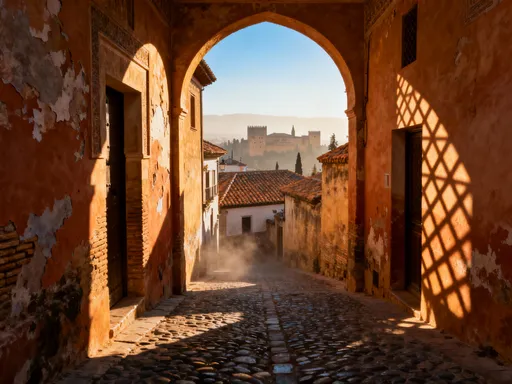
The Albayzín, Granada’s oldest neighborhood, is a masterpiece of organic urban planning. Its streets do not follow a grid; they follow the land, winding like threads through a tapestry. Built during the Islamic period, the quarter was designed for privacy, shade, and community. Houses cluster close together, their backs forming defensive walls, while narrow alleyways open unexpectedly into plazas or viewpoints. Every corner seems deliberately composed, as if an artist arranged the scene just for the walker’s arrival. This is not accidental charm—it is centuries of adaptation to climate, topography, and culture.
One of the most striking features of the Albayzín is its use of elevation. Staircases appear without warning, connecting levels like hidden passages. Some are wide and formal; others are little more than uneven stones worn smooth by time. These ascents are not merely functional; they create rhythm and drama. As you climb, the city unfolds in layers—the red-tiled roofs of neighboring homes, the distant silhouette of the Alhambra perched across the ravine, the white walls glowing in the afternoon sun. At certain points, iron grilles in windows frame the view like living paintings, a technique known as *enquadre* that turns everyday architecture into curated art.
To experience the Albayzín fully, one must walk without urgency. A recommended route begins at Plaza Nueva and winds upward through Cuesta del Chapiz, one of the oldest streets in Granada. Along the way, notice how doorways are recessed, creating shaded alcoves where neighbors might once have gathered to talk. Look up: wooden balconies overflow with geraniums, their colors contrasting vividly against the white walls. Pause at Mirador de San Nicolás, the most famous viewpoint, but arrive either early in the morning or just before sunset to avoid the crowds. When the light is right, the Alhambra seems to float above the city, bathed in gold.
Footwear matters here. The cobblestones are uneven, sometimes slick with dew, and the inclines can strain unprepared legs. Comfortable, grippy shoes are essential. So is pacing. This is not a neighborhood to rush through. Instead, allow time for detours—into a small courtyard, a quiet café, a shop selling handmade ceramics. The Albayzín rewards curiosity. And while the views are breathtaking, the true magic lies in the details: the way a shutter casts a striped shadow, the sound of water from a hidden fountain, the scent of baking bread from a home kitchen. These moments, fleeting and unphotographable, are what make the place unforgettable.
Tile by Tile: The Language of Azulejos in Granada’s Courtyards
In Granada, ceramic tiles—azulejos—are more than decoration; they are a language. Each pattern tells a story, each color carries meaning. Blue, often dominant, symbolizes water and the divine. Green evokes paradise. White reflects purity and light. The geometric designs, rooted in Islamic art, avoid figurative representation, instead using repetition and symmetry to suggest infinity. These tiles adorn fountains, stair risers, and the interiors of homes, transforming ordinary spaces into realms of quiet wonder.
In traditional Granadino homes, the courtyard—known as a patio—is the heart of domestic life. Here, azulejos line the lower walls, protecting against moisture while adding beauty. Some patterns are precise and mathematical, echoing the muqarnas domes of the Alhambra. Others are more playful, mixing floral motifs with modern touches. Visit a corrala, a historic shared courtyard building, and you’ll see how tiles function in daily life. Children play near fountains, elders sit in shaded corners, and the tiles—cool to the touch—anchor the space in tradition.
The use of azulejos has evolved over time. In older neighborhoods, the tiles tend to be hand-painted, with slight imperfections that add character. In newer cafes and boutiques, especially in the Realejo district, designers blend vintage tiles with contemporary aesthetics—pairing cobalt blues with minimalist furniture or using mismatched fragments to create mosaic tabletops. This fusion honors the past while embracing change, proving that tradition need not be static.
Photographing azulejos can be tempting, but it’s important to do so respectfully. Never enter private homes or courtyards without permission. Many corralas are still inhabited, and their beauty is not for public display. Instead, look for tiles in accessible places: public fountains, church interiors, or the patios of restaurants that welcome guests. When taking photos, focus on details rather than wide shots—capture the crack in a glaze, the way light hits a curve, the contrast between old and new. These close-ups reveal the soul of the craft. Better yet, sketch them. The act of drawing slows perception, helping you see what a camera might miss.
Doors That Speak: The Forgotten Details of Granada’s Facades
Among Granada’s most overlooked architectural elements are its doors. At first glance, they may seem like simple entryways, but each tells a story of privacy, climate, and social status. Wooden doors, often massive and studded with iron, are carved with geometric patterns or inscriptions from the Qur’an in historic homes. Some are painted in deep blues or greens, colors believed to ward off evil. Others feature recessed portals—small antechambers just inside the threshold—designed to trap heat in winter and block sun in summer.
Wrought-iron knockers, shaped like hands, rings, or animals, serve both function and symbolism. A lion’s head might signify strength; a fish could represent abundance. These details were not arbitrary; they communicated identity to visitors. In the Alcaicería, the old silk market, many doors retain their original craftsmanship, though now they lead to souvenir shops rather than merchant homes. Still, the legacy remains in the ornate grilles and arched lintels that mark each entrance.
A self-guided “door hunt” through Realejo or Albaicín can become a meditative practice. Walk slowly. Notice how some doors are flanked by planters, others by lanterns. See how the wood has weathered, how paint peels in layers like old maps. These imperfections speak of time and care. Many homes display small plaques indicating their historical significance, but even unnamed doors hold value. They are part of a continuum, linking present-day Granada to its layered past.
This kind of observation shifts the way one travels. Instead of chasing landmarks, you begin to see the city as a collection of intimate gestures—each door a quiet invitation to look closer. There is no need for expertise, only attention. And in that attention, a deeper connection forms. You start to understand that architecture is not just about monuments; it is about the spaces where people live, love, and remember.
How to See Like an Architect (Even If You’re Not One)
You don’t need a degree in architecture to appreciate Granada’s design. What you need is a willingness to look differently. Architects train themselves to see patterns, proportions, and purpose. But these skills are accessible to anyone willing to slow down and engage. Begin by tracing lines with your eyes—follow the curve of an arch from base to apex, watch how a staircase spirals, notice how light falls across a wall at different times of day. These simple acts build visual literacy.
Pay attention to scale. How does a small courtyard feel compared to a vast palace hall? Why are certain windows placed where they are? Often, the answer lies in climate or culture. High windows allow hot air to escape; narrow streets create shade. These are not aesthetic choices alone but responses to environment. Listening helps too. Stand in a covered patio during a light rain and hear how the drops echo on tile roofs. The acoustics of a space can reveal its function—whether it was meant for prayer, conversation, or solitude.
Carry a small notebook or use your phone’s sketch app to record what moves you. You don’t need to be an artist; a rough line drawing of a doorway or a quick note about the color of a wall can deepen memory and understanding. This practice turns sightseeing into learning. Over time, you’ll begin to recognize recurring motifs—the eight-pointed star, the interlaced arch, the rhythmic repetition of columns—and understand how they create harmony.
Think of architecture as a dialogue between people and place. Every wall, every tile, every step was shaped by human hands with a purpose. By tuning into that purpose, you participate in the conversation. You’re no longer just a visitor; you become a witness to centuries of thought, care, and beauty. That shift in perspective is transformative. It doesn’t require expertise—only presence, patience, and a willingness to see beyond the surface.
Beyond the Guidebook: Planning a Design-Focused Visit That Feels Authentic
To experience Granada’s architecture deeply, planning is essential—but not in the way one might expect. It’s not about checking off sites or maximizing efficiency. It’s about creating space for wonder. Start by choosing the right time to visit. Late spring (May) and early autumn (September) offer mild temperatures and fewer crowds. Avoid August, when heat and tourism peak. Within each day, aim for early mornings at major sites like the Alhambra, then shift to quieter exploration in the afternoons.
Balance is key. Spend one day immersed in the Alhambra, then another wandering the Albayzín without a map. Visit a local market—like Mercado San Agustín—to see how architecture serves daily life. Sit in a family-run café with tile floors and wooden beams, not a chain coffee shop with industrial decor. These choices ground your experience in authenticity.
Rest is part of the itinerary. Absorbing architectural detail is mentally taxing. After two hours of focused looking, take a break. Sit in a plaza, sip mint tea, watch people pass. Let the images settle. Return to a favorite spot later in the day to see how light has changed it. This kind of repetition deepens understanding.
Finally, remember that Granada’s architecture is not just to be seen—it is to be felt. It lives in the coolness of a shaded courtyard, the sound of water in a fountain, the way a doorway frames a memory. When you slow down, when you look closely, when you listen—you don’t just visit Granada. You begin to understand it. And in that understanding, you carry a piece of its beauty with you, long after you’ve left its winding streets behind.