You Won’t Believe Malmö’s Hidden Architectural Gems
When I first wandered through Malmö, I expected charming streets and Scandinavian minimalism—but what I found was way beyond that. The city’s architectural style is a secret story written in brick, glass, and bold design. From silent medieval corners to futuristic eco-districts, Malmö blends old and new in ways no one talks about. This is urban beauty with soul, surprise, and sustainability—all waiting just off the beaten path. It’s not a city that shouts; it’s one that whispers, inviting you to lean in and listen. And once you do, you begin to see how every alley, facade, and rooftop tells a story of resilience, reinvention, and quiet ambition. Malmö doesn’t parade its treasures. It lets them unfold.
First Impressions: A City That Doesn’t Try Too Hard
Malmö greets visitors with a calm authenticity that feels increasingly rare in today’s travel landscape. There are no monumental plazas or towering triumphal arches. Instead, the city reveals itself gradually—through the curve of a weathered stone step, the soft pastel hue of a 19th-century townhouse, or the way bicycle lanes weave seamlessly into pedestrian paths. This unpretentious elegance is not accidental; it reflects a deep-rooted cultural value that prioritizes function, comfort, and human scale over spectacle. Unlike larger European capitals that compete for architectural grandeur, Malmö chooses harmony. Its streets feel lived-in, not staged, offering a refreshing contrast to destinations where every corner seems designed for a photograph rather than daily life.
What stands out immediately is the city’s thoughtful integration of space and light. Buildings are generally low-rise, allowing sunlight to reach street level even in winter months. Wide windows, often painted in muted blues or warm ochres, suggest interiors designed for wellbeing. The city’s historic core, centered around Stortorget and Lilla Torg, feels intimate without being cramped. Cobblestone lanes slope gently, guiding foot traffic through a network of small squares and hidden passageways. These details are not merely aesthetic—they reflect a long-standing commitment to urban livability. Malmö’s architecture doesn’t dominate its people; it serves them.
Another defining characteristic is the balance between preservation and innovation. Old buildings are not frozen in time but adapted with care. A former warehouse might now house a design studio, its original brickwork exposed alongside modern glass partitions. This respect for continuity gives the city a layered identity—one that honors the past while embracing change. Visitors often remark on the sense of peace they feel walking through Malmö’s neighborhoods. It’s a city that doesn’t demand attention but rewards curiosity. The more you look, the more you notice: a carved wooden doorframe here, a solar panel discreetly mounted on a gabled roof there. Malmö’s architectural language is subtle, but once you learn to read it, the city speaks volumes.
The Medieval Heart: Vestergården and Hidden Courtyards
Beneath Malmö’s modern surface lies a surprisingly well-preserved medieval core, most notably in the Vestergården district. Tucked away behind unassuming storefronts and narrow alleyways, this cluster of timber-framed houses dates back to the 1400s, making it one of the oldest surviving examples of urban Scandinavian architecture. These buildings, with their steeply pitched roofs and dark wooden beams, once housed merchants, craftsmen, and traders who helped shape Malmö into a thriving port city. Today, they stand as quiet testaments to centuries of resilience, having survived fires, wars, and waves of modernization that erased similar structures elsewhere in the region.
What makes Vestergården truly special is how seamlessly it has been woven into contemporary life. These historic buildings are not museum exhibits behind velvet ropes—they are homes, cafes, and small businesses. A resident might open their window to hang laundry, unaware that the structure behind them is over 500 years old. This integration of past and present gives the neighborhood a rare authenticity. Visitors can walk through cobblestone courtyards where children once played and traders once bargained, now used as quiet green spaces or outdoor seating for local restaurants. The city’s preservation efforts focus not on reconstruction but on adaptive reuse, ensuring that these buildings remain functional and relevant.
The architectural details in Vestergården tell stories of craftsmanship and survival. Many of the homes feature original wooden doors with hand-forged iron hinges, and some still have wattle-and-daub infill between the timber frames—a traditional building method that predates modern insulation. The facades, though weathered, retain their character through careful restoration. Malmö’s approach to heritage conservation emphasizes sensitivity over perfection. Instead of replacing old materials with new, restorers often repair and reinforce, preserving the patina of age. This philosophy reflects a broader cultural attitude: history is not something to be polished into a tourist attraction but a living thread in the city’s ongoing story.
Exploring Vestergården feels like stepping into a different era without losing touch with the present. The quiet atmosphere, broken only by the occasional bicycle bell or café chatter, invites reflection. It’s easy to imagine the rhythm of medieval life—markets at dawn, the clatter of horse-drawn carts, the scent of bread from wood-fired ovens. Yet modern life flows around these ancient structures effortlessly. This coexistence is not just charming; it’s instructive. Malmö demonstrates that preserving history does not require freezing it in time. Instead, it can thrive when allowed to evolve alongside the needs of the community.
Art Nouveau Whispers: When Elegance Met Function
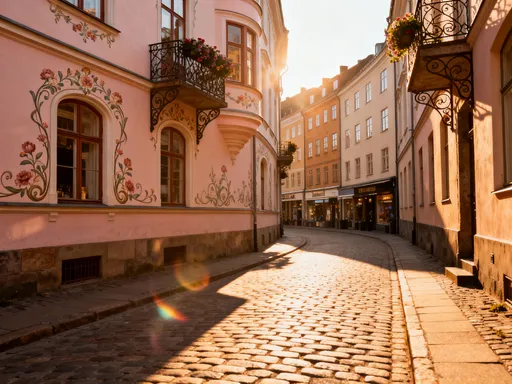
As Malmö expanded in the early 20th century, a new architectural language emerged—one that balanced beauty with practicality. Influenced by continental European trends, particularly the Art Nouveau movement, the city’s growing middle class sought homes that reflected both style and comfort. Neighborhoods like Stora Nygatan and Sofielund became canvases for this aesthetic, where ornate stucco work, floral iron railings, and asymmetrical window arrangements transformed residential streets into open-air galleries of design. Yet unlike the flamboyant interpretations seen in cities like Paris or Brussels, Malmö’s version of Art Nouveau was restrained, even modest—a reflection of Scandinavian sensibilities.
The buildings from this era are characterized by their attention to detail. Facades often feature hand-carved motifs of leaves, vines, and geometric patterns, subtly integrated into the brickwork or plaster. Balconies are supported by wrought-iron brackets shaped like twisting stems, and doorways are framed with decorative tilework or stained glass. These elements were not merely decorative; they signaled a shift in social values. Homeownership was becoming more accessible, and families wanted spaces that felt personal and dignified. Architecture became a way to express identity—not through opulence, but through thoughtful design.
What sets Malmö’s Art Nouveau buildings apart is their functionality. Even the most ornate homes were designed with practical living in mind. Large windows maximized natural light, essential during long Nordic winters. Interior layouts prioritized flow and efficiency, with separate areas for cooking, dining, and family life. Many of these homes included small private gardens or access to shared courtyards, reinforcing the importance of green space in urban living. This marriage of form and function was not accidental. It reflected a broader societal shift toward improving quality of life through design—a principle that continues to influence Malmö’s urban planning today.
Walking through these neighborhoods today, one can still feel the care that went into their creation. Many of the original features have been preserved, thanks to strict conservation guidelines and a community that values architectural heritage. Residents often take pride in maintaining the historic character of their homes, repairing rather than replacing original details. This continuity gives the neighborhoods a sense of stability and belonging. The Art Nouveau era in Malmö was not a fleeting trend but a lasting contribution to the city’s architectural identity—one that reminds us that beauty and practicality need not be mutually exclusive.
Modernist Legacy: Social Housing With Soul
In the decades following World War II, Malmö, like many European cities, faced a housing crisis. Rapid urbanization and population growth demanded solutions, and the answer came in the form of modernist architecture. Inspired by functionalist principles, the city embarked on large-scale housing projects in neighborhoods like Rosengård, Bellevue, and Oxie. These developments featured clean lines, flat roofs, and repetitive block structures—hallmarks of the modernist movement. But Malmö’s approach differed from the impersonal high-rises seen in other post-war cities. Here, modernism was not just about efficiency; it was about dignity.
The design of these housing complexes emphasized community and human connection. Instead of isolating towers, Malmö’s planners created low- to mid-rise buildings arranged around shared courtyards and green spaces. These communal areas were intended to foster interaction among residents, particularly children and the elderly. Playgrounds, benches, and pedestrian pathways were integrated into the layout, ensuring that public space was accessible and inviting. Materials were chosen for warmth—light-colored brick, wood paneling, and large glazed windows—softening the geometric rigor of modernist design. The result was housing that felt humane, even at scale.
One of the most significant aspects of Malmö’s modernist legacy is its commitment to equality. These neighborhoods were not segregated by income or status. Teachers, factory workers, and civil servants lived side by side, reflecting a societal ideal of inclusivity. The architecture supported this vision by offering consistent quality across units—same-size windows, similar layouts, and shared amenities. This egalitarian approach was radical at the time and remains a point of pride for the city. It demonstrated that good design should not be a luxury but a right.
Over time, some of these neighborhoods faced challenges, including economic decline and social marginalization. But rather than abandon them, Malmö has invested in renewal. Renovation projects have upgraded insulation, replaced outdated systems, and revitalized public spaces—all while preserving the original architectural intent. Community centers, libraries, and cultural hubs have been added to strengthen social fabric. These efforts show that modernist ideals—when paired with ongoing care and investment—can endure. Malmö’s social housing is not perfect, but it stands as a powerful example of architecture’s potential to serve the collective good.
Turning Waste into Wonder: The Transformation of Western Harbour
If Malmö’s past is written in brick and timber, its future is being built in glass and steel—and nowhere is this more evident than in Västra Hamnen, or Western Harbour. Once a bustling shipyard, the area fell into decline by the late 20th century, leaving behind abandoned warehouses and polluted land. Instead of redeveloping it as a conventional business district, Malmö chose a bolder path: to create a model of sustainable urban living. The result is one of Europe’s most innovative waterfront transformations, where environmental responsibility and architectural ambition go hand in hand.
The centerpiece of the district is the Turning Torso, a 190-meter residential skyscraper designed by Spanish architect Santiago Calatrava. Inspired by a twisting human form, the building’s nine segments rotate progressively from base to top, creating a dynamic silhouette that has become synonymous with Malmö’s rebirth. While the tower draws international attention, the true innovation lies in the surrounding neighborhood. Västra Hamnen was one of the first urban developments in Sweden to commit fully to environmental standards. Nearly all buildings meet or exceed passive house requirements, meaning they use minimal energy for heating and cooling. Rooftop solar panels, geothermal heating, and wind turbines contribute to a renewable energy grid, drastically reducing the area’s carbon footprint.
Equally important is the district’s human-centered design. Streets are narrow and traffic-calmed, with priority given to cyclists and pedestrians. Car ownership is discouraged through limited parking and high fees, promoting alternative transportation. Green spaces are abundant—pocket parks, community gardens, and waterfront promenades encourage outdoor activity and social interaction. Schools, daycare centers, and healthcare facilities are located within walking distance, reinforcing the idea of a self-sustaining neighborhood. Even the building materials were chosen for sustainability, with recycled steel, low-emission concrete, and locally sourced wood.
Västra Hamnen is not just a showcase of technology; it is a lived-in community. Families, young professionals, and retirees call it home, drawn by the high quality of life and strong sense of place. The district has become a testing ground for urban solutions now being adopted in cities worldwide. Malmö’s success here proves that sustainability does not require sacrifice. On the contrary, it can enhance comfort, beauty, and social connection. The transformation of Western Harbour is more than a real estate project—it is a statement of values, showing that cities can grow without compromising the planet or people.
Everyday Beauty: How Design Touches Daily Life
In Malmö, exceptional architecture is not reserved for landmarks or luxury developments. It is embedded in the ordinary moments of daily life. A bus stop is not just a shelter but a carefully designed space with ergonomic seating, weather-resistant materials, and soft lighting. School buildings feature large skylights and natural ventilation, creating classrooms that feel open and energizing. Public libraries are designed as community living rooms, with flexible layouts, quiet reading nooks, and children’s areas that spark imagination.
These details reflect a deep belief that everyone deserves access to well-designed environments, regardless of status or income. Playgrounds, for instance, are not afterthoughts but thoughtfully planned spaces that encourage creativity and inclusivity. Some feature sensory elements for children with disabilities, while others incorporate natural materials like wood and stone to connect kids with the outdoors. Even bicycle parking is designed with care—secure, covered, and conveniently located near entrances, reinforcing the city’s commitment to cycling as a primary mode of transport.
One of the most telling examples of this philosophy is the design of public restrooms. In many cities, these spaces are neglected or avoided. In Malmö, they are clean, well-lit, and often architecturally distinctive. Some are housed in small pavilions with modern facades, blending functionality with aesthetic appeal. This attention to detail sends a powerful message: that dignity is found not only in grand gestures but in the care taken with the smallest services.
What makes this approach remarkable is its consistency. From the grandest civic building to the most modest streetlight, there is a shared commitment to quality and thoughtfulness. This is not the work of a single architect or planner but the result of a cultural ethos—one that values design as a public good. In Malmö, beauty is not a luxury; it is a necessity. It shapes how people feel as they move through the city, influencing mood, behavior, and sense of belonging. When architecture is this deeply integrated into daily life, it stops being something you merely see and becomes something you experience.
Why Malmö’s Secret Architecture Matters—And Where to Start Exploring
Malmö’s architectural richness lies not in spectacle but in substance. It proves that world-class design does not require extravagance or fame. Instead, it emerges from a steady commitment to balance—between old and new, between individual expression and collective wellbeing, between innovation and tradition. The city’s buildings do more than shelter people; they shape the way people live, interact, and feel. In an era of rapid urbanization and environmental challenges, Malmö offers a quiet but powerful model: that cities can be both sustainable and soulful, efficient and humane.
For travelers seeking a deeper understanding of urban design, Malmö is a revelation. The best way to experience it is on foot, without a strict itinerary. Begin in the old town, where Vestergården’s timber-framed houses whisper of medieval life. Wander through Stora Nygatan to admire the delicate ironwork of early 20th-century homes. Take a bus or bike to Rosengård to see how modernist ideals continue to shape community life. Then, head to Västra Hamnen, where the Turning Torso reaches for the sky, symbolizing a city that dares to reimagine its future.
Local guided walking tours, offered by organizations like Malmö Stad and independent architecture collectives, provide insightful context for what you’re seeing. These tours often focus on specific themes—sustainability, social housing, or hidden courtyards—allowing visitors to explore the city through a particular lens. For a self-guided experience, pick up a map from the tourist information center that highlights architectural landmarks and lesser-known gems. Don’t rush. Allow time to sit in a courtyard, sip coffee at a sidewalk café, or simply observe how light moves across a brick wall at different times of day.
Malmö teaches us to look closer. Its architectural magic is not in monuments but in details—in the curve of a staircase, the color of a door, the way a building meets the street. It invites us to appreciate design not as decoration but as a quiet force that shapes our lives in profound ways. In a world that often values speed and scale, Malmö reminds us of the power of patience, care, and human connection. Its hidden gems are not just buildings. They are blueprints for a better way to live.